

Sourcing Authentic Millwork and Period-Appropriate Materials
Philadelphia’s architectural legacy spans centuries, from Colonial row homes in Society Hill to Victorian mansions in Chestnut Hill. Each era left distinct millwork characteristics: raised panel wainscoting in Federal-period homes, elaborate crown mouldings in Greek Revival townhouses, and ornate brackets in Italianate residences. Restoring these historic properties presents unique challenges for homeowners and contractors alike.
The complexity of historic restoration goes beyond aesthetics. Property owners must balance authentic period details with modern building codes, energy efficiency requirements, and contemporary living needs. The Philadelphia Historical Commission maintains strict standards for properties in historic districts, requiring homeowners to follow specific guidelines when altering exterior and sometimes interior elements according to Philadelphia Historical Commission regulations.
Sourcing period-appropriate materials requires more than visiting a big-box retailer. Historic restoration demands specialized knowledge of architectural periods, access to moulding and millwork suppliers who can replicate vintage profiles, and an understanding of material characteristics that affect authenticity. Before beginning any restoration project, homeowners should document existing conditions, research their home’s architectural period, and partner with suppliers experienced in historic preservation work.
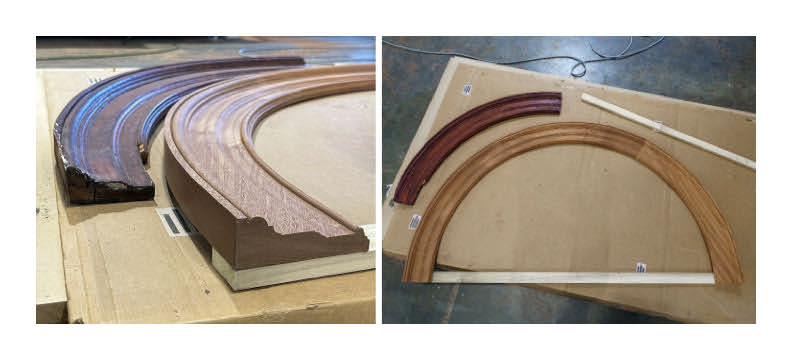 True, historically accurate restoration requires the ability to recreate custom millwork authentically.
Understanding Your Home’s Architectural Period and Original Millwork
Identifying your Philadelphia home’s architectural style is the foundation of authentic restoration. Each architectural period employed distinct millwork profiles. Federal homes used narrow, refined casings around doors and windows. Greek Revival interiors featured wide baseboards with classical Greek-inspired profiles. Victorian homes showcased complex crown mouldings combining multiple pieces to create dramatic shadow lines and depth.
Before removing or altering any existing trim or woodwork, take time to document what you have. Photograph each moulding profile from several angles. Even damaged original pieces are worth keeping as reference, as they give your supplier exactly what they need to reproduce the profile accurately. The Office of Historic Properties recommends preserving original materials wherever possible, so restore rather than replace when you can. When the time comes to replicate, Tague Lumber’s custom millwork division can measure existing profiles and reproduce them to match exactly, whether you are working with crown moulding, wainscoting, baseboards, or decorative brackets.
For period-specific guidance, local preservation organizations are a valuable starting point. The Preservation Alliance for Greater Philadelphia offers resources on regional architectural periods, and the Historic Preservation Office provides technical assistance for restoration projects throughout the commonwealth. Both can help you understand what materials and methods are appropriate for your specific home’s history.
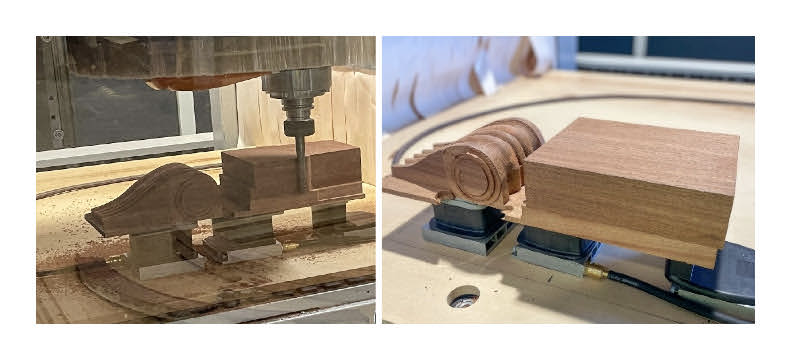
Custom millwork begins with precision cuts and quality hardwood, the foundation of authentic period restoration.
Sourcing Custom Mouldings and Reproduction Millwork
Standard stock profiles available at typical building suppliers rarely match historic millwork details. Historic homes require custom-milled reproductions that precisely replicate original profiles, dimensions, and proportions. Working with custom millwork specialists who can match existing profiles becomes essential for authentic restoration.
Custom millwork fabrication begins with creating detailed profiles of existing trim. Specialists measure every dimension of original pieces, then create custom knives that cut matching profiles. This process allows exact replication of unique mouldings specific to your home’s architectural period. For homes where original elements are missing entirely, historical documentation and period pattern books guide reproduction of appropriate profiles.
Material selection significantly impacts restoration authenticity. Historic millwork was typically crafted from old-growth lumber with tight grain patterns and superior stability. Modern lumber often comes from younger, faster-growing trees with different characteristics. Species selection matters too. Federal-period homes commonly used pine and poplar, while Victorian-era properties featured oak, walnut, and mahogany for prominent trim elements.
Deciding between repair and replacement requires careful assessment. The Secretary of the Interior’s Standards prioritize retaining original materials when feasible. Minor damage, rot in isolated areas, or loose joints often allow for repair rather than replacement. However, extensive deterioration, missing sections, or structural compromise may necessitate reproduction. Experienced restoration contractors and millwork suppliers help property owners make informed decisions balancing preservation standards with practical considerations.
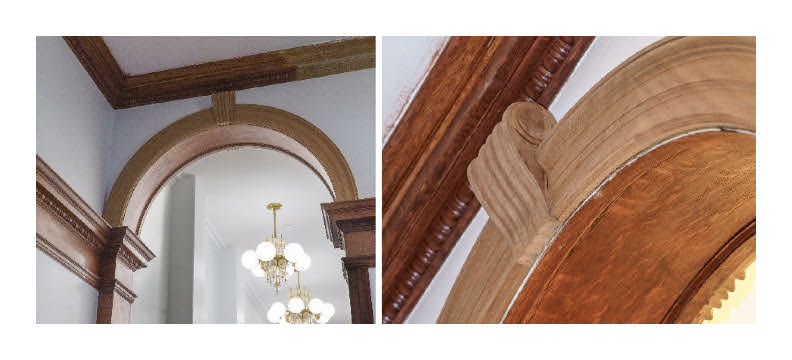
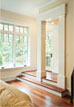
Custom curved millwork pieces crafted to match original architectural details in a historic Philadelphia home.
Understanding Philadelphia’s Architectural Heritage
Successful historic restoration depends on working with knowledgeable suppliers who understand Philadelphia’s architectural heritage. Not every building materials supplier maintains the expertise, equipment, or relationships necessary for period-appropriate millwork. Specialized suppliers familiar with Philadelphia Historical Commission requirements and preservation standards provide invaluable guidance throughout the restoration process.
Planning timelines appropriately prevents project delays. Custom millwork requires lead time for profile measurement, custom knife creation, and fabrication. Specialty materials may need ordering from specific suppliers or mills.
Quality materials and skilled craftsmanship represent sound investments in long-term preservation. Properly restored millwork using appropriate materials and techniques will endure for generations, maintaining your home’s historic character and value. Shortcuts using inappropriate modern substitutes compromise authenticity and may require costly corrections later.
Tague Lumber has served the greater Philadelphia region for over a century, helping homeowners and contractors source materials for historic restoration projects. Our historic renovation services include custom millwork capabilities trusted by preservation professionals. Whether you’re restoring a Colonial townhouse or a Victorian mansion, our team understands the unique requirements of period-appropriate restoration.
If you need help with your historic restoration project, visit any Tague Lumber location or call 1-800-668-2483 to discuss your millwork and materials needs with our knowledgeable staff.
—Blog post by Luis Diego Millan, Tague Lumber
Sources
1. Philadelphia Historical Commission Rules & Regulations, https://www.phila.gov/documents/historical-commission-rules-regulations-and-ordinance/
2. The Secretary of the Interior’s Standards for the Treatment of Historic Properties, https://www.nps.gov/subjects/historicpreservation/standards.htm
3. Pennsylvania State Historic Preservation Office (PA SHPO), https://pahistoricpreservation.com/about/
4. Preservation Alliance for Greater Philadelphia – Preservation Toolkit, https://preservationalliance.com/resource-library/preservation-toolkit